Maintaining Older Cameras.

I have a monthly routine of checking over my cameras to make sure they are all ok.

Here are some simple tips you can follow to make sure your camera is always ready to be used.

Battery and Memory Cards
Every few weeks take out the battery and memory card. The simple action of removing them and putting them back in will clean the contacts without any additional work. Contacts can become oxidised over time and the simple action of removing the battery or card will clean the two mating surfaces and remove any oxidisation.

Charging Batteries
If you have more than one set of batteries, there’s no harm in cycling those as well at the same time. Charge up your spare set before putting them in the camera. Don’t worry about charging up the set that have just come out of the camera, it is best to store batteries partially charged and then charge them to full before use.

Cleaning and Maintaining the Exterior
For the exterior surfaces, some plastics can become ‘sticky’ as they get old. I use a car product that is recommended for use for maintaining dashboards and other black plastics. I don’t spray it on to the camera direct as it might find its way inside the camera, instead I spray it on to a microfibre soft cloth and then wipe the plastics with the cloth. Only use a small amount of the spray, you can always go over the surfaces a second time if required.

To get in to the small spaces I spray some of the liquid in to an aerosol cap and use a cotton bud to get in to the nooks and crannies. It really does bring up the shine again on hand grips and feels less ‘sticky’ after treatment.

I did the same thing on the rubber focus and zoom rings on a lens too.

You only need to do this sort of renovation treatment about once a year if that.

Visual Checks
Take some time to look at all sides of your camera and check for any damage, cracks in any plastics etc. Catching these faults early can be a blessing in the long term.

Clock setting
Check the clock setting in the menu to make sure the time is correct, the built in clocks on cameras are not renowned for their accuracy! I always set mine to local time when ever I’m travelling. It will then tie in with any photos I take on my iPhone and the iPhone will also record the location so the two sets of photos are easier to synchronise when you get home.

Your camera should be ready when you need it at short notice.

Take care and keep taking photos.
What camera should I use today?

Anyone who is a fountain pen user (and I am one too) will know the issue. You have far more than you can sensibly use at once!! The only difference with cameras is that it doesn’t matter if you swap from one to another every day or week!

Except may be for film cameras, imagine having several cameras loaded up with different types of films and then trying to remember which one had what film in it. You could dedicate a Filofax to keeping track of all of your cameras!

In the last few weeks I’ve been cycling through my cameras as the mood has grabbed me.

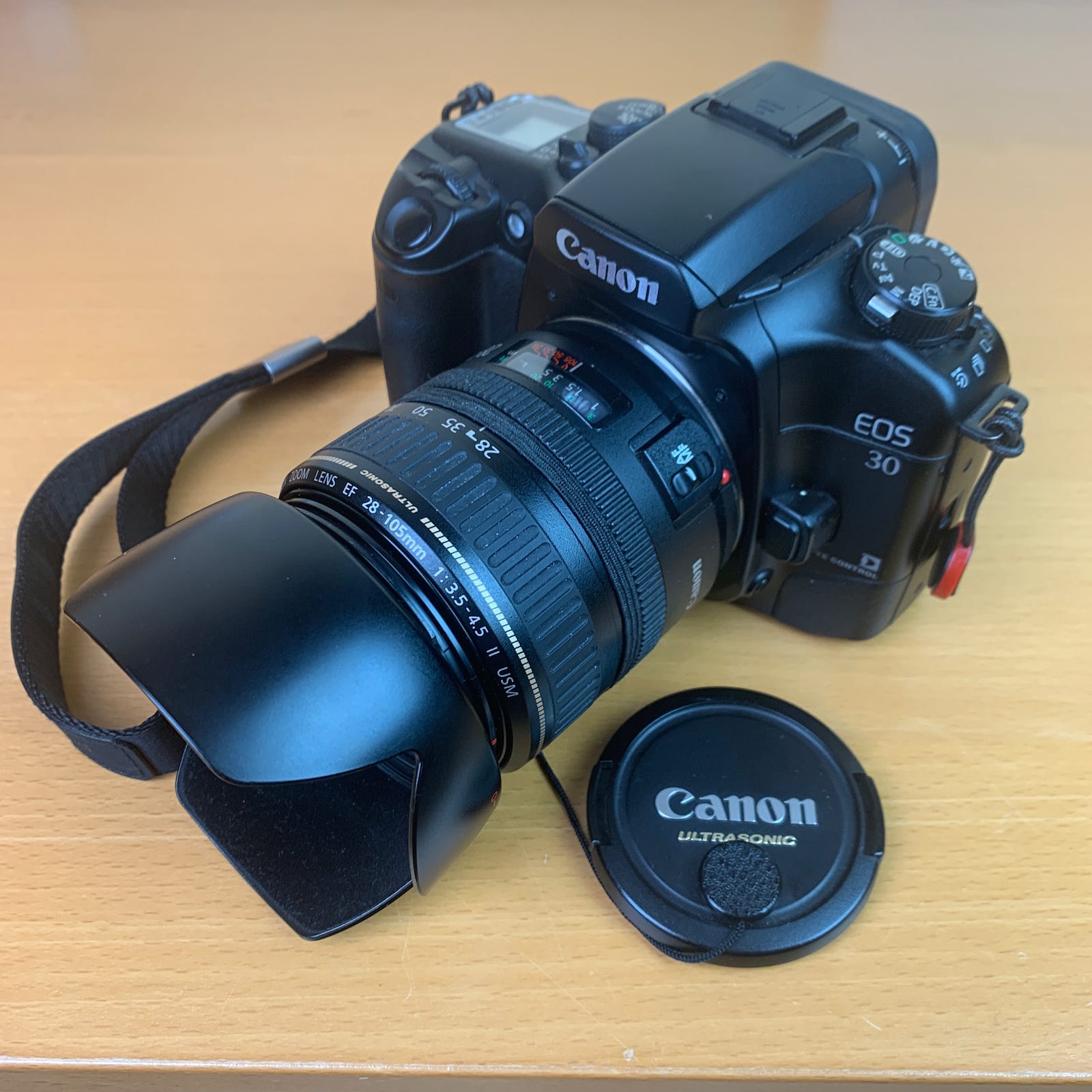
I’ve loaded up my Canon EOS30 with a roll of HP5 black and white film, I really need to get a move on and finish off the roll, I have another unused roll in my bag to use as well. I’m a rather infrequent user of my film camera these days. The cost and the challenge I suppose.

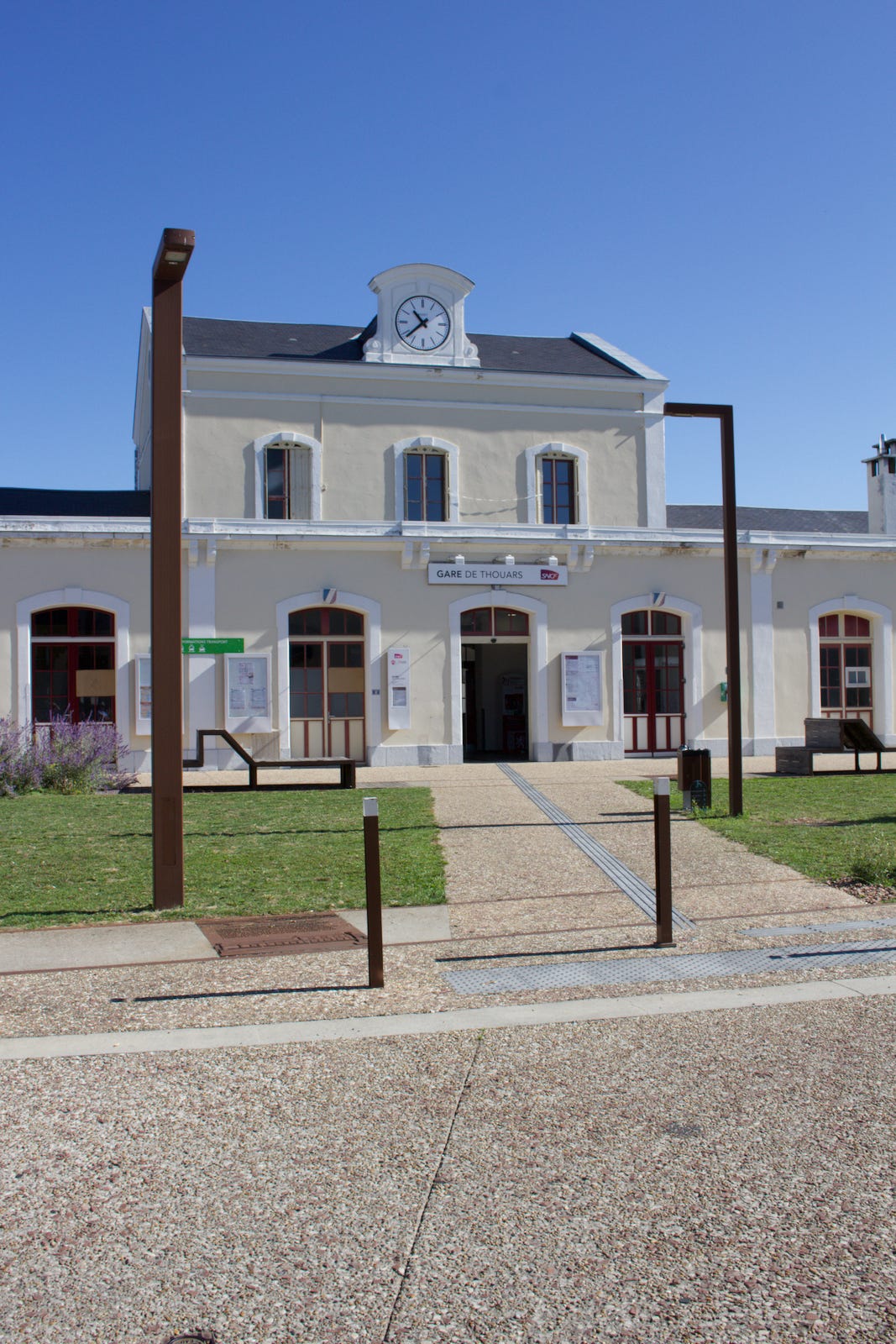
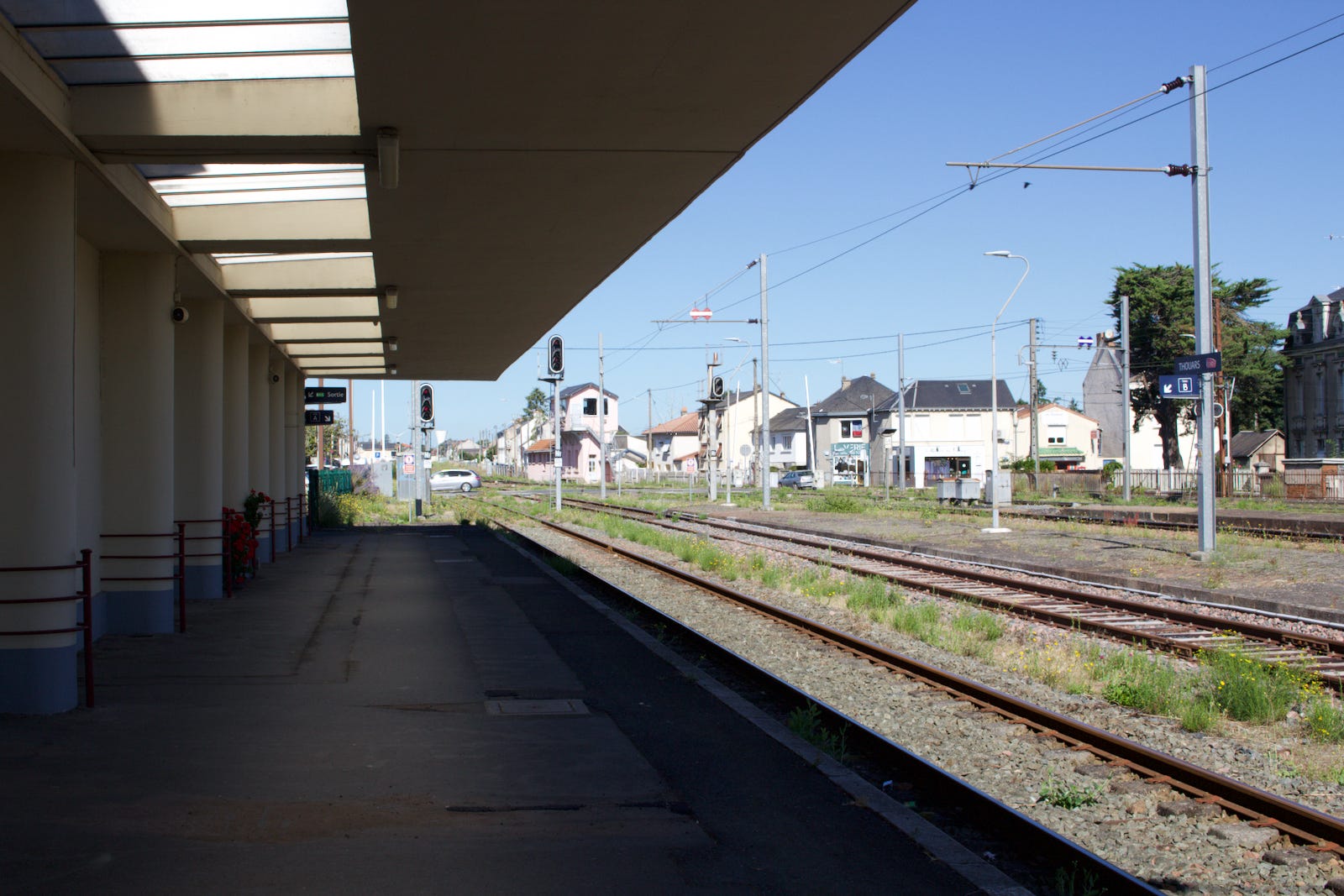
On the digital front my EOS100D has seen quite a bit of use with the 28mm pancake lens. That with a simple wrist strap makes a great ‘guided tour camera’. We went on a local history tour last week, exploring the history of the railway in our town here in France. It was a big employer in the town once upon a time, not so much so these days sadly, although we do still have a passenger service.

Following the publication of this video about the Nikon D700, I used my Nikon D300 for a few days. Although I’m less familiar with that camera, I still do enjoy using it. It pushes the grey matter a bit to do so, but I love the results I get with the camera.

Please do watch that video even if you aren’t a Nikon shooter I’m sure you will appreciate the cameras a lot more.

I didn’t realise that Lucy and her partner were such big fans of Nikon cameras as well.

Do follow Lucy on Instagram and of course here on Substack, she is a great inspiration to me when I’m looking for new ideas of photos to take, to try and get myself away from photographing the same scenes all the time!

Then a few days ago this video was released

That made me dig out my old Canon EOS20D of similar vintage to the EOS5D. The 20D is quite a weighty beast a bit like the Nikon D300

Steven Heise did a great video review of the EOS 20D about a year ago:

His channel is excellent if you are looking at older DSLR cameras or even older mirrorless cameras.

Keep that lens cap off and keep taking photos.

Take care

Scan in those old slides

‘Slide shows’ are a little outdated in the modern era of sharing images on the internet. But in the days of analogue photography, a correctly exposed slide image is just about as good as it came.

I was recently looking for some old slides of my own taken in the 1970’s from the early days of my photography hobby. I didn’t find them. However I did discover a box of slides I had completely forgotten about from 1978 and some more from 1984/85.

I set up my flat bed scanner to be able to scan slides which it can do 4 slides at a time. After a bit of experimenting I managed to get it to do them unattended. Pop in the slides, hit scan and it would do a two pass scan and then save the individual images.

Seeing the images again for the first time in over 40 years has brought back a lot of happy memories. I’ve shared a few on line as well and been contacted by several old friends from back then as well. It has been a wonderful memory filled week.

Get out your old slides and live on the memories again.

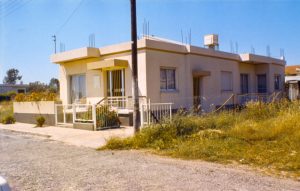
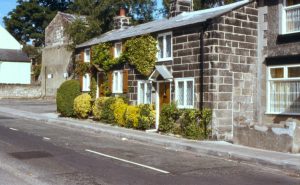
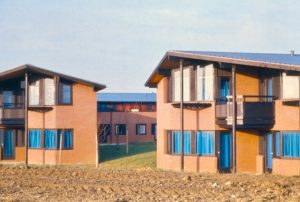
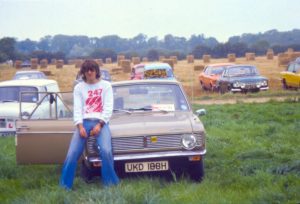
A house I lived in Cyprus back in 1983. Some old cottages in Bebington. A new housing complex in Milton Keynes I lived in back in 1978. And me…..yes with significantly more hair than I have now, taken with my first car in about 1978.

A Chance Meeting

I have been on holiday in Slovenia and Austria these last couple of weeks.

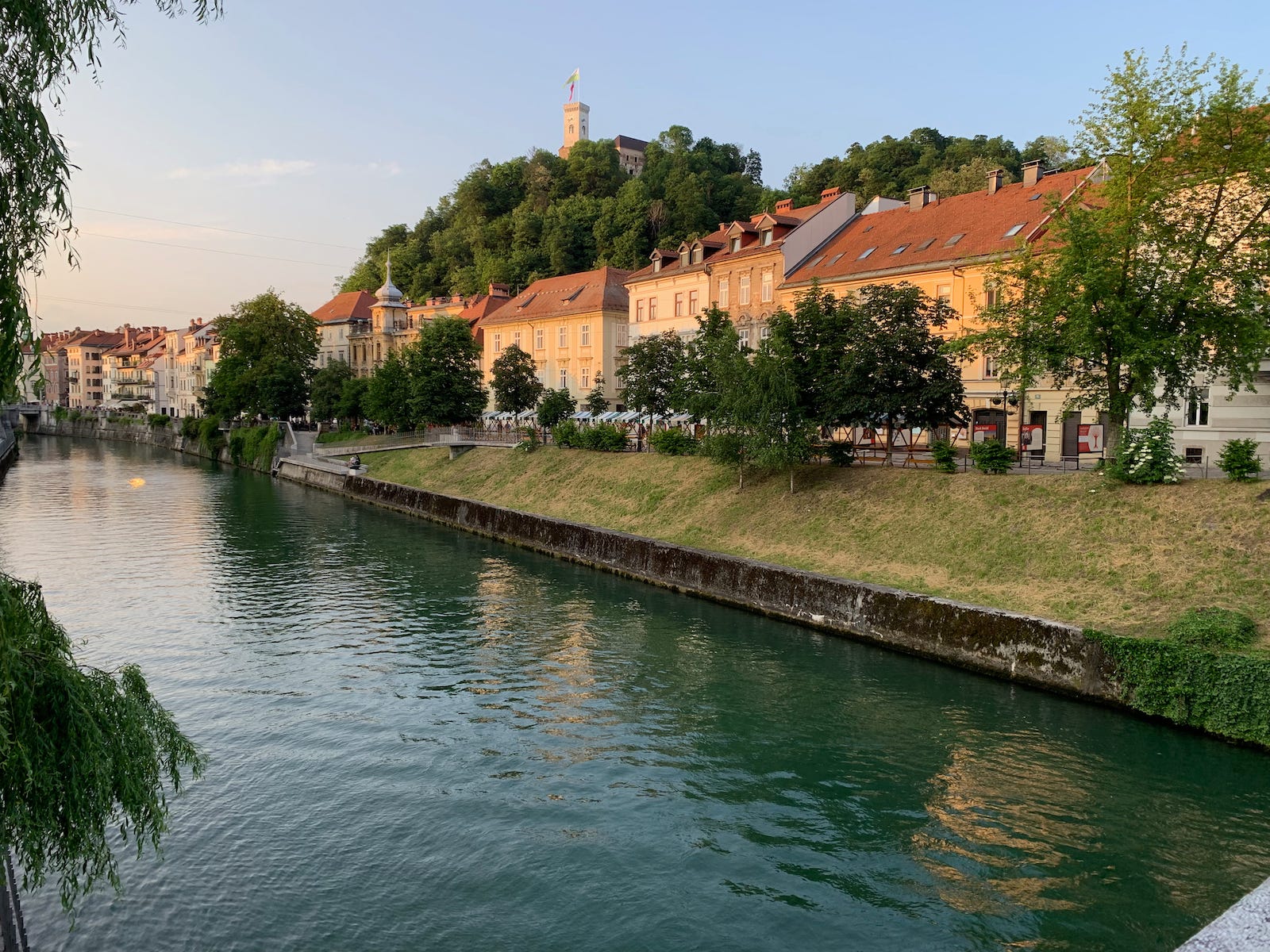
One evening we were sat in a restaurant in Ljubljana at an outside table, whilst waiting for our food to arrive. I noticed several keen photographers passing the restaurant at intervals of a few minutes. Two or three passed us before I started to think this has to be an organised group of some sort. All of the cameras looked fairly serious, expensive newish model mirrorless or high end DSLRs or one sort or another.

They all looked keen, focused on looking for that must take scene or shot. ‘In the zone’ if you know what I mean.

I had enjoyed taking plenty of photos myself. I regretted not chatting with any of these photographers in Ljubljana.

Today we were on a tram here in Vienna and a young woman and her boyfriend (I presume) got on the tram with us. Both were carrying cameras, but I noticed they also both had film cameras on straps too. He had a Canon EOS300 and she had an Olympus OM2.

I had no clue what nationality they were, but I took a chance and in my native English. I just said

‘Excuse me, it’s nice to see that you are in to film photography as well as digital’

They both smiled and we got in to a great chat about photography for about 10-15 minutes before we arrived at our destinations and we went our own ways.

It turns out they were students on holiday from near Stuttgart in Germany, but their English was perfect. I speak no German at all!

We didn’t swap contact details, I wish I had now, but I didn’t want to appear to be too ‘weird’

It was great to just chat with some other photographers and have an exchange about our mutual interest.

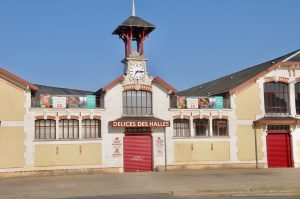
Ljubljana
Vienna tram

Next time you see a photographer, say hello!

Editing Your Images

I’m definitely from the school of photography that started with film photography, therefore there wasn’t much opportunity to edit the images, unless you were processing them yourself in your own darkroom.

Back in the late 1970’s I was living in Milton Keynes and I had access to a community workshop that had its own darkroom and processing equipment and an enlarger etc.

I was also given an old Gnome enlarger by my uncle, it was quite ancient, but I learnt to do black and white printing with it. I was able to do some limited ‘editing’ by cropping the image and ‘dodging’ the image to bring up the shadows and take down the highlights. Lots of waving of hands under the projected image!

I was eventually able to set up my own darkroom in a hall closet for a few years in a small one bedroom apartment I was living in at the time.

I never explored doing colour film processing or printing. Nearly all of my early film photography was done in black and white, something I want to return to very soon. I would send off my colour films to a processing lab to get processed and printed.

With the advent of digital photography we have many tools at our disposal to edit and correct images.

I’m still one for trying to ‘get it right in the camera’ I do not use Adobe Lightroom or Photoshop. The subscription costs put me off considering them really.

I use Apple Mac computers (iMac + Macbook Pro) as well as my iPad Pro and iPhone, they are all linked up with the Apple Photos App for the storage of all my images and this offers non-destructive editing of those images.

I try to limit the amount of editing I do to images to cropping and correcting any horizontal/vertical alignment. I will leave all the messing around with layers and presets to you clever folks!

Ivel Mill, Biggleswade, England