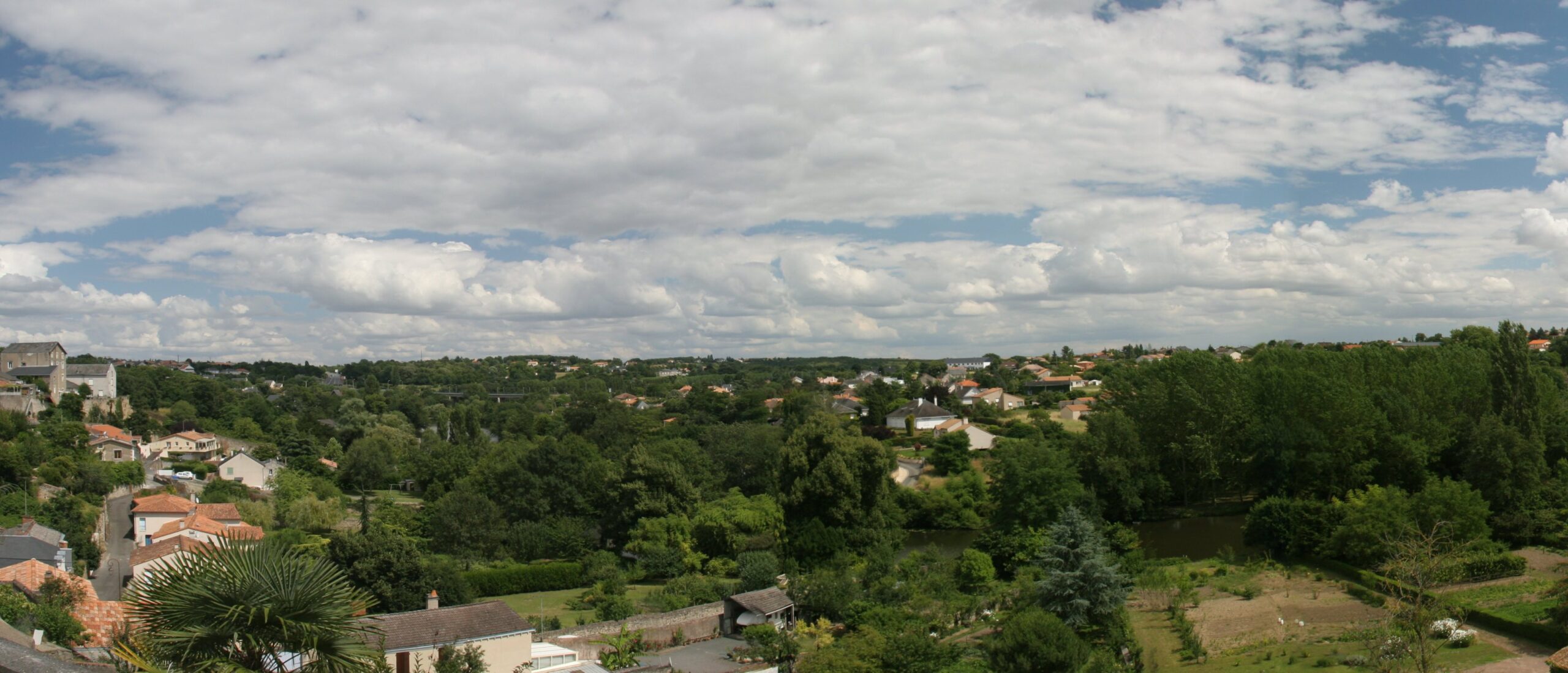
 With the advent of digital photography it has opened up a lot more opportunities for me to experiment with techniques which whilst they were not available with film, they tended to be a lot more expensive to do. Panoramic photography was one of these techniques I’ve previously tried using film, but it was never that successful for me.
With digital photography it is a lot easier to achieve good results, but certainly not fool proof. Some of my earlier attempts where quite good, although I found it difficult to repeat these earlier results successfully every time, so I recently had an opportunity whilst over in France to refine the technique and capture the same scene on several days using different techniques to see the overall results and to learn from the exercise.
I started off playing around using the software supplied with my Canon EOS 20D, called Photostitch. It does a fairly good job of joining your files together. But this software doesn’t work on my Mac, or at least it didn’t work under Snow Leopard. I discovered a later version of the software on the net that now does work. It’s nice and easy to use. You just assemble the photos in the right order and it then stitches them together. What could be easier….
The photo above I took quite early on and I must have hit lucky in one of my early attempts. Subsequent panoramas just didn’t have the same impact as this one so I went back to the drawing board and tried out various options to discover what I was doing wrong.
I found that in order to get consistent results you need to lock the exposure of the camera, so this means putting your camera in to manual mode. Then I found it is best to pan across your scene and look at the variation in exposure you are getting as you go from one side to the other. You might need to make some adjustments so that the exposure falls slightly either side of what the camera considers the correct exposure. You are however aiming to get the least variation across the whole scene. To achieve this I found after a few attempts it’s best to aim for the sun at its highest point in the day so that your scene is illuminated as evenly as possible. Being cloudy isn’t too much of a problem as long as the cloud isn’t too patchy, otherwise you will have quite large differences as you pan across the scene.
The next important thing you need is to the ability to hold your camera as steady as possible so that your pictures scan across the scene in the same plane. I have done some handheld, but using a tripod or mono pod makes the task that bit easier.
When you are taking your frames for your panorama, I found it important to have a decent overlap from one frame to the next, rather than getting all technical with angles and things I just used the focusing spots in the viewfinder, the outer ones on my camera are at about a quarter and three quarters across the frame. So take a picture note where the three quarters one is in the scene and move the camera so that the quarter spot is roughly pointing at the same point in the scene. This also helps you keep the camera level if you are doing this hand held. Just keep repeating this until you have covered the whole scene.
Most people do panos in landscape mode, the photo below was done with a series of portrait pictures, you get a much more ‘natural’ landscape across the scene that way, but you do have to take more shots.
Try different view points, just moving a few feet to the left or right can make a difference.
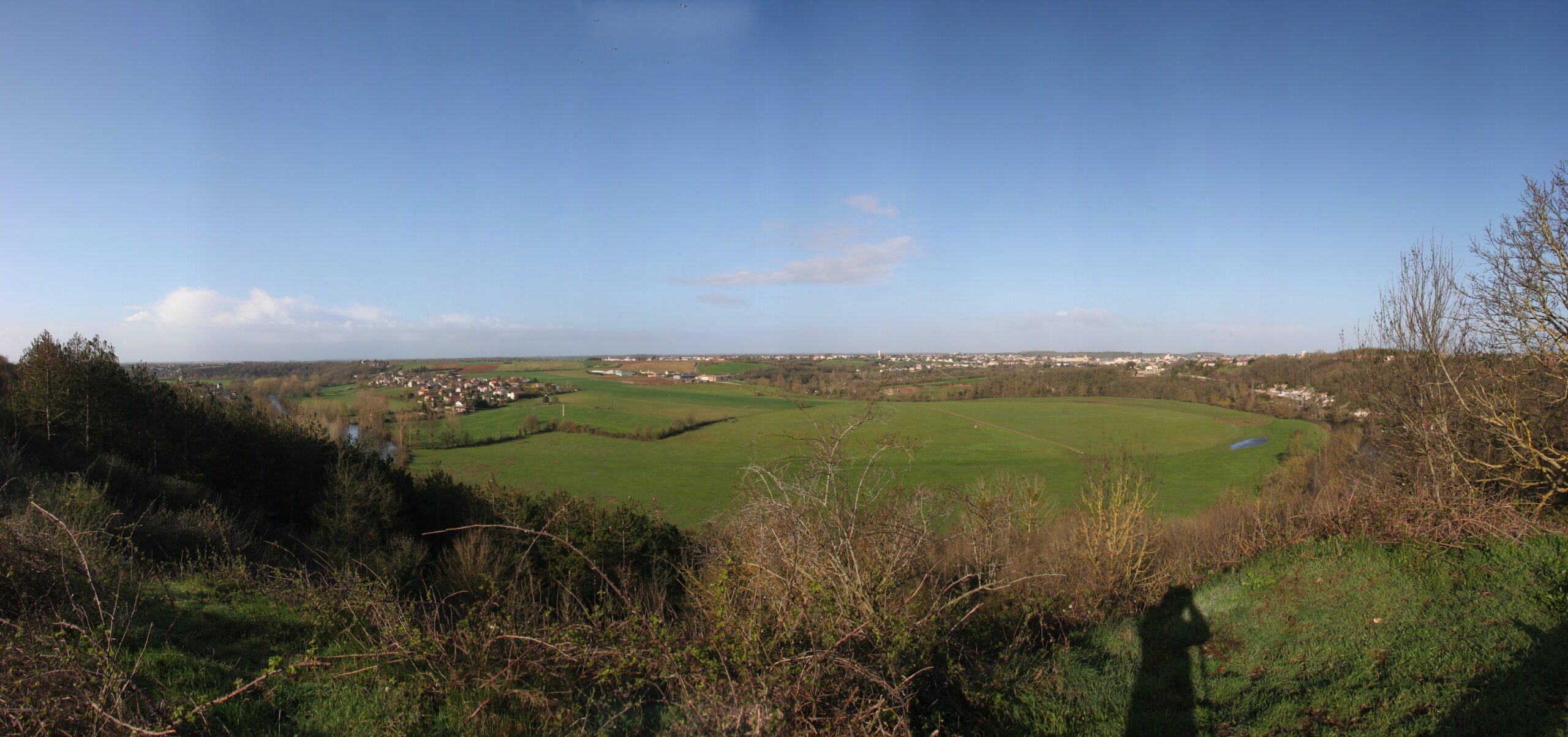
As you can see with this image there is also the risk of getting your own shadow in the scene! I could have cropped that out and I did in other versions of this image, but I have left this one as it came out of the software to start with.
Be prepared for some seriously big images, I’ve reduced these ones in size to get them on to the blog in a reasonable time.
The best advice I can give though is to keep trying to shoot different scenes. I’m lucky in that the above scene in the second picture is only about 50 metres from our house so I can quickly walk there take a series of pictures, nip back to the house, download the pictures and go back again if I’m not happy with the result!
Have fun….